Vintage Friends Serif Font for Web Design
Vintage Friends for Creative Portfolio Websites
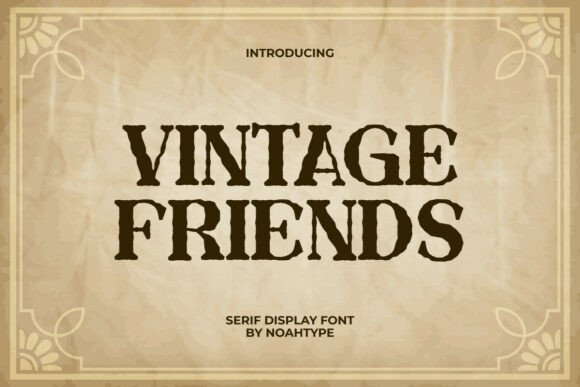
Using Vintage Friends in headers or section titles adds a vintage vibe that feels both nostalgic and professional. This makes it ideal for designers who want to showcase their work with a distinct brand identity. The subtle textures in each character also enhance the overall visual appeal without overwhelming the layout.
Vintage Friends for Boutique Online Stores
I recommend using Vintage Friends sparingly in these contexts—perhaps for hero section titles or limited-time offer banners. It pairs beautifully with minimalist sans-serif fonts for body copy, ensuring that the vintage aesthetic doesn’t interfere with the clarity of product descriptions or pricing information.
Vintage Friends for Product Landing Pages
Use Vintage Friends for headline text, but keep it concise. Long phrases or paragraphs may become difficult to read, especially on smaller screens. Pairing it with a modern sans-serif font for supporting text ensures that your landing page remains accessible and user-friendly across all devices.
Vintage Friends for Blog Headers and Article Titles
Consider using Vintage Friends for blog post titles, category headers, or featured article sections. For long-form articles, stick to a simpler serif or sans-serif font for body text to maintain readability. The contrast between the two fonts will guide readers through the content naturally.
Vintage Friends for Social Media Graphics
Use Vintage Friends for captions, hashtags, or promotional banners. However, be mindful of legibility when using this font on small screens. Avoid overly decorative variations if the message needs to be quickly scanned. A lighter weight or alternate style might be more suitable for mobile optimization.
Vintage Friends for Brand Identity and Logo Design
When designing a logo, consider how Vintage Friends will interact with other brand assets such as colors, illustrations, or icons. It works best when used as a primary typeface for logos or taglines, with complementary fonts used for secondary text. Always check for multilingual support and file formats like webfonts if your brand operates globally.
Vintage Friends for Digital Ads and Marketing Materials
Use Vintage Friends for headline text in ads, but ensure that it doesn’t compromise the clarity of your message. Keep the font size large enough for quick scanning and avoid using it in environments where it might clash with background images or colors. Testing different weights and styles can help you find the most effective application for your specific campaign.
Vintage Friends for Editorial Design and Content Sections
Use Vintage Friends for headings, subheadings, or pull quotes to create visual interest. For body text, opt for a simpler serif or sans-serif font to ensure readability. The contrast between the two will help establish a clear visual hierarchy and improve the user’s engagement with the content.
Vintage Friends for Conversion-Focused Layouts
Apply Vintage Friends to key conversion elements like headlines, CTA buttons, or feature titles. Ensure that the font doesn’t distract from the main message and remains readable across different screen sizes. Pairing it with a clean, modern font for supporting text will help maintain a balance between creativity and usability.