Merrymunch: A Playful Christmas Doodle Font for Festive Branding
Merrymunch on a Holiday Café Logo Concept
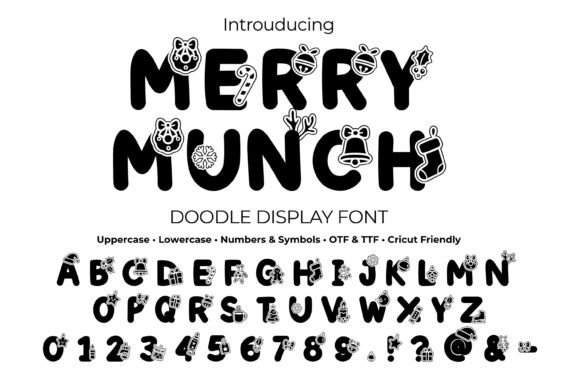
As I opened my brand board one crisp November morning, the first thing I wanted to test was Merrymunch. This bold, playful Christmas doodle display font had caught my eye for its whimsical curves and festive energy. I applied it to a logo concept for a holiday café—imagine a cozy spot serving spiced lattes and seasonal pastries. The moment I placed Merrymunch on the mockup, the design felt instantly more joyful and inviting. It wasn’t just a font; it was a mood.
The visual characteristics of Merrymunch are unmistakable. Its playful, hand-drawn style mimics the charm of a child’s doodle, with soft edges and cheerful embellishments that feel like they were sketched with a smile. This makes it perfect for any project that wants to evoke warmth, nostalgia, or fun without losing its decorative appeal.
Merrymunch in Packaging Mockups for Seasonal Merchandise
Next, I tested Merrymunch on a packaging mockup for a line of handmade holiday candles. The goal was to create something that stood out on store shelves while still feeling personal and artisanal. When I paired Merrymunch with a clean sans serif font for supporting text, the contrast worked beautifully. The decorative font took center stage on the label, drawing the eye immediately to the product name, while the simpler typeface handled the description and pricing.
What struck me most was how well Merrymunch balanced playfulness with professionalism. Even though it’s a decorative font, it didn’t feel too whimsical for a retail product. It added character without overwhelming the design. That’s a rare quality in fonts that lean heavily into the decorative category.
For those looking to use Merrymunch in similar contexts, I recommend testing it at different sizes and weights. On a large label, it shines with its full personality, but when scaled down, it can lose some of its charm. Always consider the context and ensure it complements rather than competes with other design elements.
Merrymunch for Party Invites and Social Media Graphics
One of the most exciting applications of Merrymunch came when designing a set of party invites for a winter festival. The client wanted something that felt both elegant and festive, and Merrymunch delivered exactly that. Used as a headline on the digital invite, it gave the event a sense of occasion without being over the top. The same font also worked well in the Instagram post visuals, where it was used in a call-to-action section to encourage RSVPs.
When working with Merrymunch in social media graphics, I found that pairing it with a modern sans serif font helped maintain readability. For example, using a sleek sans serif for body copy and Merrymunch for headlines created a nice balance between traditional and contemporary aesthetics.
If you’re considering Merrymunch for your next project, remember that it’s best suited for short phrases and display purposes. Long paragraphs or small text sizes might not showcase its strengths. Keep this in mind when planning your layout or choosing the right platform for your content.
Merrymunch in Kids’ Designs and Gift Tags
I also tested Merrymunch in a kids’ design project—a line of personalized gift tags for a handmade shop. The font’s playful nature made it an instant fit for the target audience. The tags featured names and messages in Merrymunch, wrapped around a simple illustration of snowflakes and stars. The result was charming and perfectly aligned with the brand’s identity.
Another great use case for Merrymunch is in gift tags, stickers, and seasonal branding. Its bold, expressive style adds a touch of personality that can elevate even the simplest of designs. Whether you're creating a holiday card or a custom sticker, Merrymunch brings a sense of joy and creativity to every element.
For designers who want to experiment with Merrymunch, I suggest starting with a few key projects before committing to a larger branding system. Test it in different contexts, such as print, web, and digital assets, to see how it behaves across platforms. Also, be sure to check the licensing terms if you plan to use it in commercial work or client projects.