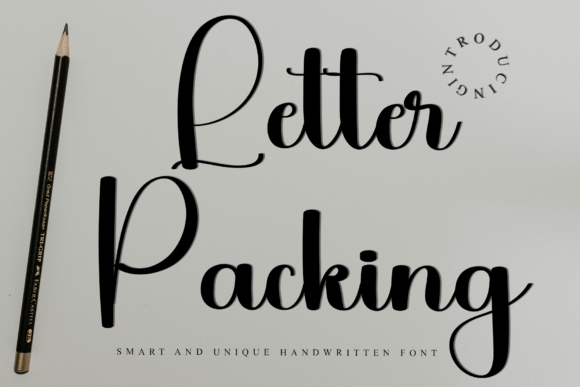
Letter Packing: A Handwritten Font for Branding Projects
I was halfway through sketching a brand identity for a new boutique when I stumbled upon Letter Packing. As a Script Handwritten font, it stood out immediately with its narrow, tall proportions and elegant, continuous strokes. It felt like the kind of typeface that could bring warmth and personality to a brand without sacrificing professionalism.
Letter Packing in Logo Design for a Café Brand
When I first placed Letter Packing on a mockup of a café logo, I knew I had found something special. The font’s Fonts style worked perfectly for a small, locally-owned coffee shop looking to evoke a sense of charm and authenticity. Its tall, slender letters gave the logo a refined look while still feeling approachable and handcrafted.
The Letter Packing font wasn’t just about aesthetics—it also played a role in how the brand would be perceived. The elegance of the strokes suggested quality, while the handwritten feel made it feel personal and welcoming. It balanced well between being unique and readable, which is essential for a logo that needs to be legible at different sizes and from a distance.
Testing Letter Packing on Business Cards and Packaging Mockups
I tested Letter Packing on a few different materials—business cards, packaging mockups, and even a sample menu. On business cards, the font’s narrow structure allowed for more text without cluttering the design. For packaging, the Script Handwritten style gave the product labels an artisanal touch that aligned with the café’s theme of using locally-sourced ingredients.
One thing I noticed early on was how well Letter Packing paired with a clean sans serif font for body text. This combination helped maintain visual hierarchy and readability across different branding elements, ensuring that the Fonts didn’t overpower the message but still held attention.
Letter Packing for Social Media Graphics and Website Headers
As I moved into digital assets, I realized Letter Packing had a natural place in social media graphics. Whether it was a post announcing a new menu item or a promotional graphic for a seasonal drink, the font added a friendly, inviting tone. The Script Handwritten character made each post feel like a personal note from the café owner rather than a generic ad.
On the website header, I used Letter Packing as a display font, keeping the rest of the site in a modern sans serif. This contrast helped guide the user’s eye toward key messages, while maintaining a cohesive brand identity. It also worked well for call-to-action buttons, where the handwritten feel encouraged engagement without distracting from the action itself.
Letter Packing in Print Materials and Posters
For print materials, such as flyers and posters, Letter Packing brought a tactile quality to the designs. The continuous strokes of the Script Handwritten font gave the visuals a sense of motion and flow, making them visually engaging even at a glance. When printed, the font retained its elegance, which was important for maintaining a professional image alongside the café’s casual vibe.
I also experimented with Letter Packing on signage. Placed on a wooden sign above the café entrance, it felt like a natural extension of the space—warm, inviting, and in line with the overall aesthetic. It wasn’t too ornate, so it didn’t lose clarity when viewed from a distance.
Letter Packing as a Supporting Typeface in Editorial Design
In editorial design, Letter Packing served as an accent font for headlines and pull quotes. It added visual interest without competing with the main body text. I paired it with a classic serif font for articles and a modern sans serif for subheadings, creating a layered yet harmonious typographic system.
What I appreciated most was how the Fonts style of Letter Packing maintained consistency across both digital and print formats. It adapted well to different color schemes and backgrounds, which was crucial for a brand that wanted flexibility in its marketing materials.
Font Pairing and Licensing Considerations
When working with Letter Packing, I made sure to check the available styles and weights. The font came with several variations, allowing me to use it for both subtle accents and bold statements. I also verified the commercial font licensing to ensure it was suitable for all the client’s needs, including digital and print outputs.
For font pairing, I leaned into contrasts—combining Letter Packing with a strong serif for titles and a clean sans serif for body text. This helped create balance and ensured the Script Handwritten font remained a highlight rather than a distraction.
Letter Packing in Merchandise and Product Labels
The Letter Packing font also shone in merchandise design. From branded mugs to tote bags, the Fonts style gave each item a personal, handmade feel. It was especially effective on product labels, where the narrow, tall proportions made the text stand out clearly against the background.
I found that Letter Packing worked best for short-form text in these cases—like taglines, brand names, or ingredient lists. Its elegant strokes gave the products a premium feel, which was exactly what the café needed to stand out in a competitive market.
Final Thoughts on Letter Packing for Branding Projects
Overall, Letter Packing proved to be a versatile and stylish choice for this branding project. Its Script Handwritten nature offered a unique voice that resonated with the café’s identity, while its readability and adaptability made it suitable for a wide range of applications—from logos to social media posts.
If you’re working on a brand that needs a touch of personality and elegance, Letter Packing is worth considering. It’s not just a Fonts option; it’s a design decision that can shape how your brand is perceived and remembered by your audience.